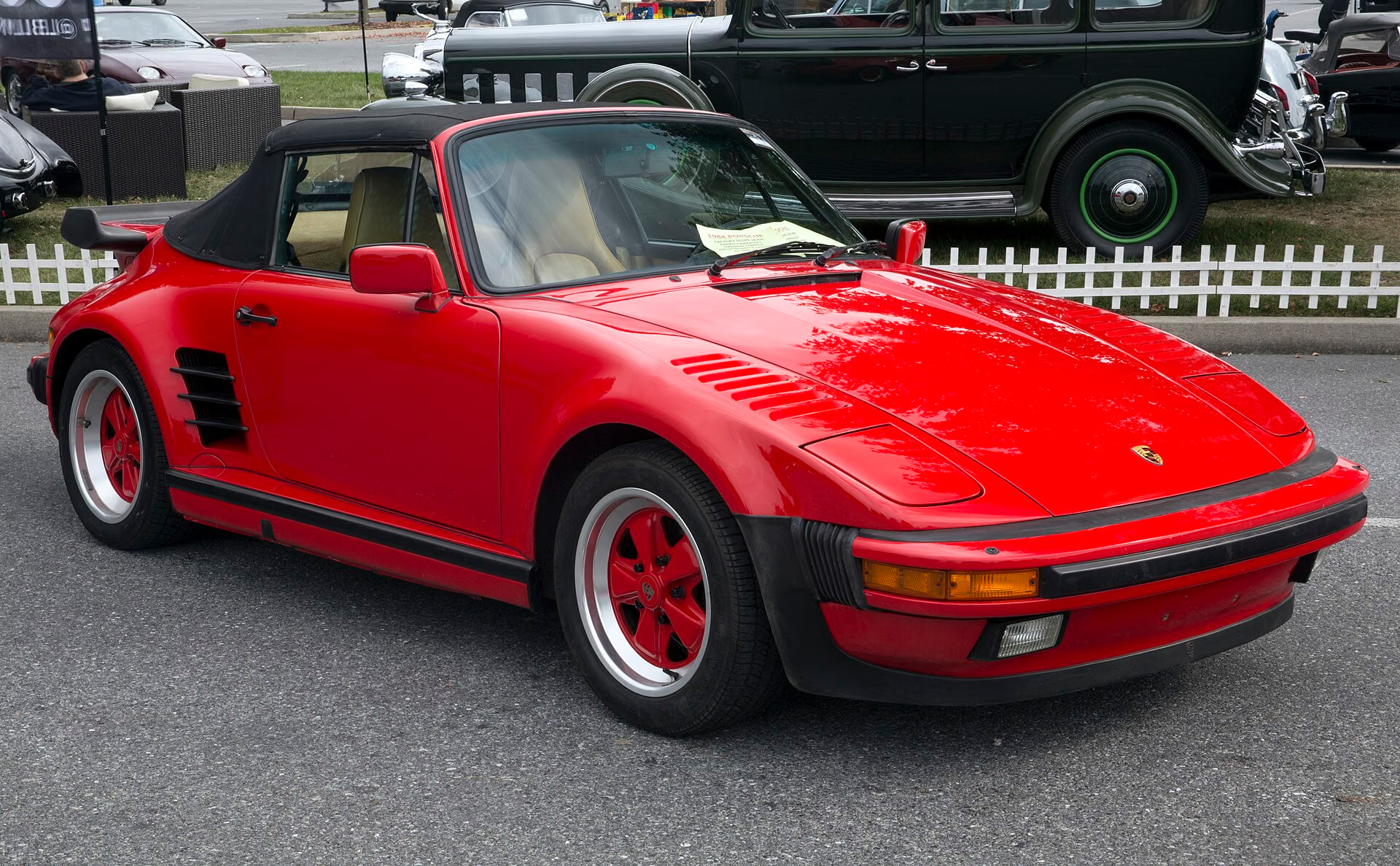
911 Turbo Flachbau
Specification plate
Numbers as published
- Engine
- Power
- 0–100 km/h
- Top speed
- Weight
- Drivetrain
- Transmission
- Production
- Body styles
- Torque
3D viewer
Spin it yourself
Reduced motion — still frame shown
Gallery
7 views of the Turbo Flachbau
Click a frame · Esc closes · ←/→ move
Watch
5 films on the Turbo Flachbau
Compare
Set it against its neighbours
| Spec | 1982–1989 | 911 Carrera 3.21984–1989 | 911 Carrera 3.2 Turbo Look1984–1989 | 911 Turbo 3.3 (930)1978–1989 |
|---|---|---|---|---|
| Years | 1982–1989 | 1984–1989 | 1984–1989 | 1978–1989 |
| Engine | 3.3-litre turbocharged flat-six (930/60); 930/66 S 330 PS kit on most later cars | 3,164 cc air-cooled flat-six (Type 930/20 Euro, 930/21 US), port injection with DME engine management | 3,164 cc air-cooled flat-six (Type 930/20), port injection with DME engine management | 3,299 cc turbocharged flat-six (Type 930/60), air-to-air intercooler |
| Power | 330 PS | 231 PS | 231 PS | 300 PS |
| 0–100 km/h | — | 0–100 km/h 6.1 s | 0–60 mph 6.1 s — 0–100 km/h not published | 0–100 km/h 5.4 s (Porsche, stuttcars) |
| Top speed | 275 km/h | 245 km/h | 245 km/h | 260 km/h |
| Weight | — | 1,210 kg | — | ≈1,300 kg (MY1978–79); 1,210–1,379 kg across the run |
| Drivetrain — identical across all cars | Rear-wheel drive | Rear-wheel drive | Rear-wheel drive | Rear-wheel drive |
| Transmission | 915 4-speed manual; five-speed Getrag G50 from 1989 | 915 5-speed manual (MY1984–86); Getrag G50 5-speed with hydraulic clutch (MY1987–89) | 915 5-speed manual (MY1984–86); Getrag G50 5-speed (MY1987–89) | 915 4-speed manual; five-speed Getrag G50 from 1989 |
| Body styles — identical across all cars | Coupé · Targa · Cabriolet | Coupé · Targa · Cabriolet | Coupé · Targa · Cabriolet | Coupé · Targa · Cabriolet |
| Production | 948 built — 58 generation 1 (1982–83), 204 generation 2 (1983–87), 686 generation 3 (1987–89) | 76,473 built — 35,670 Coupé, 19,987 Cabriolet, 18,468 Targa (Wikipedia) | 3,572 units (all body types) — stuttcars; 755 M491 Coupés for the US (RM Sotheby's) | 18,770 (Wikipedia) / 17,792 (porsche.com) — sources differ |
Open the full comparison
Pairs load as /compare?a=gseries/turbo-flachbau&b=gseries/carrera-3.2
Sources (4)
What the sources do not settle (3)
Credits
Media on this page
Image 1
Source (opens in a new tab)Image 2
Source (opens in a new tab)Source
Source (opens in a new tab)Gallery image 3
Source (opens in a new tab)Gallery image 4
Source (opens in a new tab)Gallery image 5
Source (opens in a new tab)Gallery image 6
Source (opens in a new tab)Gallery image 7
Source (opens in a new tab)Gallery image 8
Source (opens in a new tab)Engine recording
Source (opens in a new tab)3D model