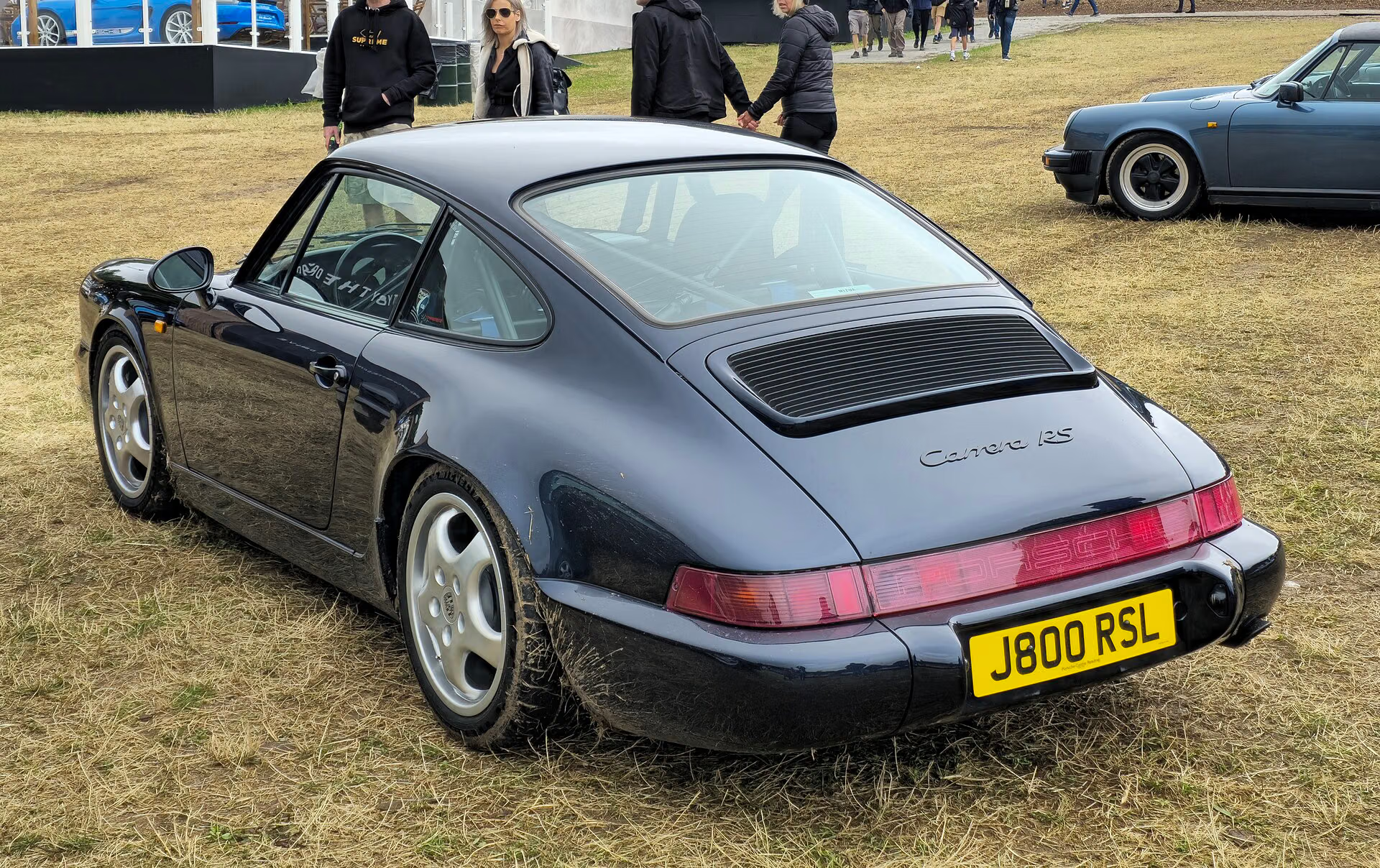
1988–1994
964—1988–1994
Third Generation 911
Modernity, all-wheel drive, and the last 911 turbos
When the 964 arrived in late 1988 it looked like a mildly facelifted 911 but was in fact about 85 per cent new, and it quietly introduced features the model line had never had: all-wheel drive, power steering, ABS, an automatically extending rear spoiler, dual ignition with knock control, a three-way catalytic converter and — from 1990 — the Tiptronic automatic gearbox. The drag coefficient fell to 0.32, at the time the most aerodynamic 911 ever built, and coil springs on MacPherson struts front and semi-trailing arms rear replaced the old torsion-bar suspension for the first time in the 911's history.
The engine was the new 3.6-litre M64 flat-six making 250 PS (184 kW) and 310 Nm, with twin-spark ignition technology borrowed from Porsche's aircraft engines. The first car was the 250 PS all-wheel-drive Carrera 4, launched at DM 114,500 in August 1988; the mechanically near-identical rear-wheel-drive Carrera 2 followed a year later from DM 103,500. Coupé, Targa and Cabriolet bodies were all offered, and the 964 Targa was the last 911 built with a genuinely removable roof panel — a layout that would not return until the 991.
Generation summary figures
Production
63,76263,7621988–1994)
Engine
3.63.6air-cooled flat-six, 250 PS (184 kW)
New content
≈85% of the car was new vs the Carrera 3.2
Aerodynamics
cd 0.32 — the most aerodynamic 911 to date
911 firsts
All-wheel drive, power steering, ABS, Tiptronic
Rarest
Turbo S 3.6 Flachbau: 76 built in 1994
The range
21 variants
964 · every entry linked
 911 Carrera 41989–1994250 PS (184 kW; 247 hp) @ 6,100 rpmAll-wheel drive — electronically controlled permanent AWD developed for the 959, nominally 31% front / 69% rear with variable distribution, plus a console traction-control switch·Coupé · Targa · Cabriolet
- 911 Carrera 21990–1994250 PS (184 kW; 247 hp) @ 6,100 rpmRear-wheel drive·Coupé · Targa · Cabriolet
- Limited911 Carrera 4 Turbo-Look1992–1994250 PS (184 kW; 247 hp) @ 6,100 rpmAll-wheel drive — electronically controlled permanent AWD, 31% front / 69% rear nominal·Coupé
- Limited911 Carrera 2 Turbo-Look1992–1993250 PS (184 kW; 247 hp) @ 6,100 rpmRear-wheel drive·Coupé · Cabriolet
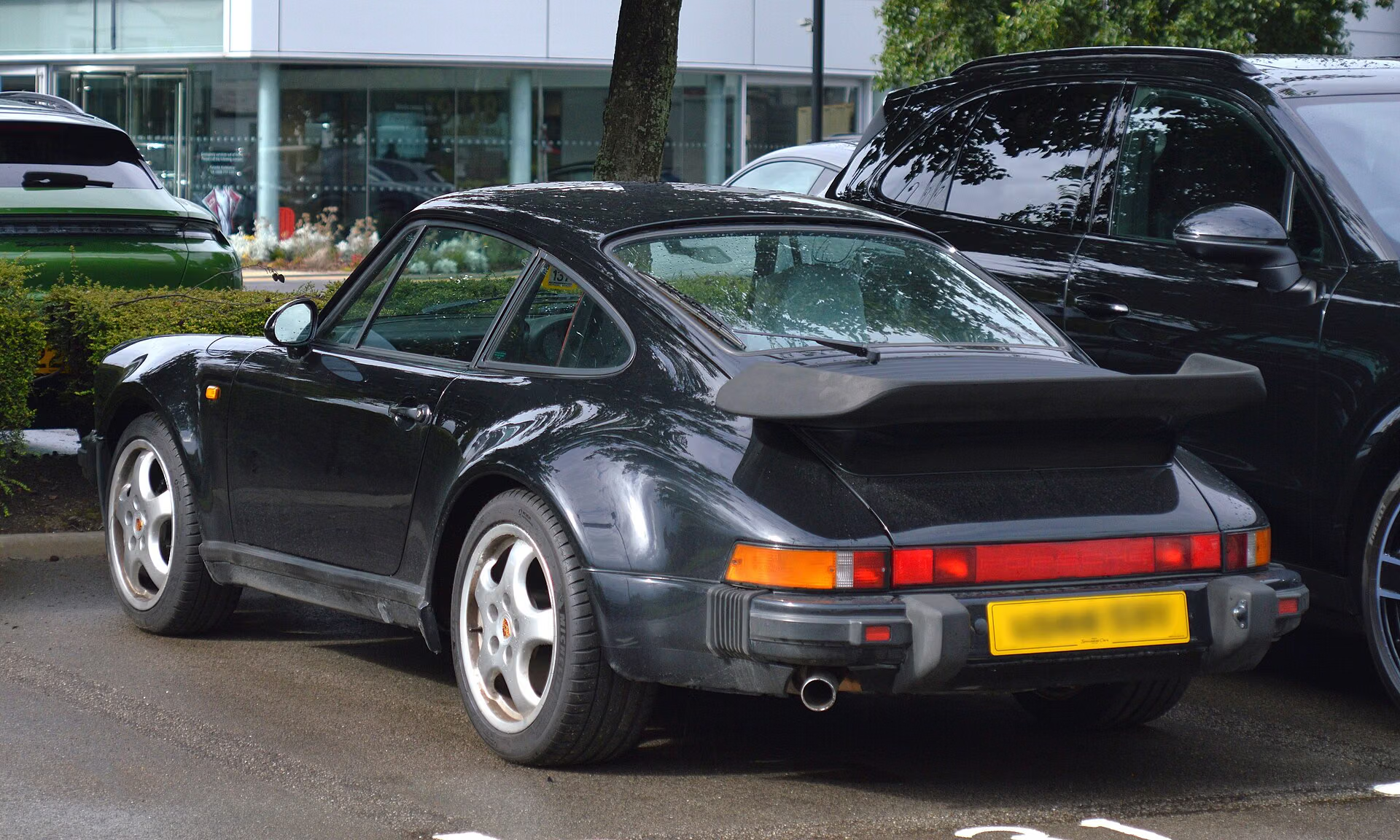
- 911 Turbo 3.31990–1994320 PS (235 kW; 316 hp) @ 5,750 rpmRear-wheel drive; ZF clutch-type limited-slip differential, 20% lock under acceleration, 100% under deceleration·Coupé
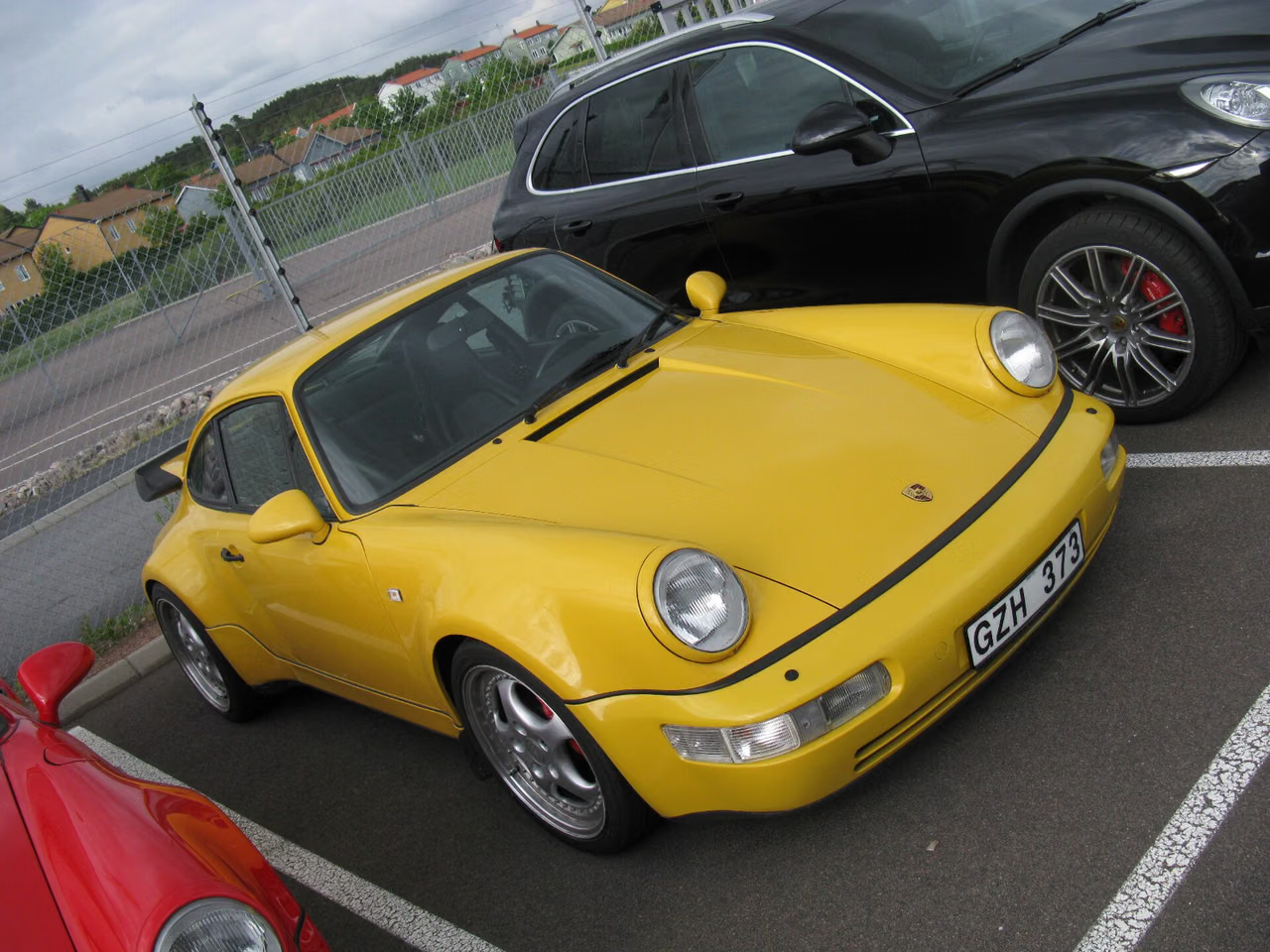 Limited911 Turbo 3.61993–1994360 PS (265 kW; 355 hp) @ 5,500 rpmRear-wheel drive; ZF clutch-type limited-slip differential·Coupé
- Limited911 Turbo S 3.6 Flachbau1994385 PS (283 kW; 380 hp) @ 5,750 rpmRear-wheel drive·Coupé
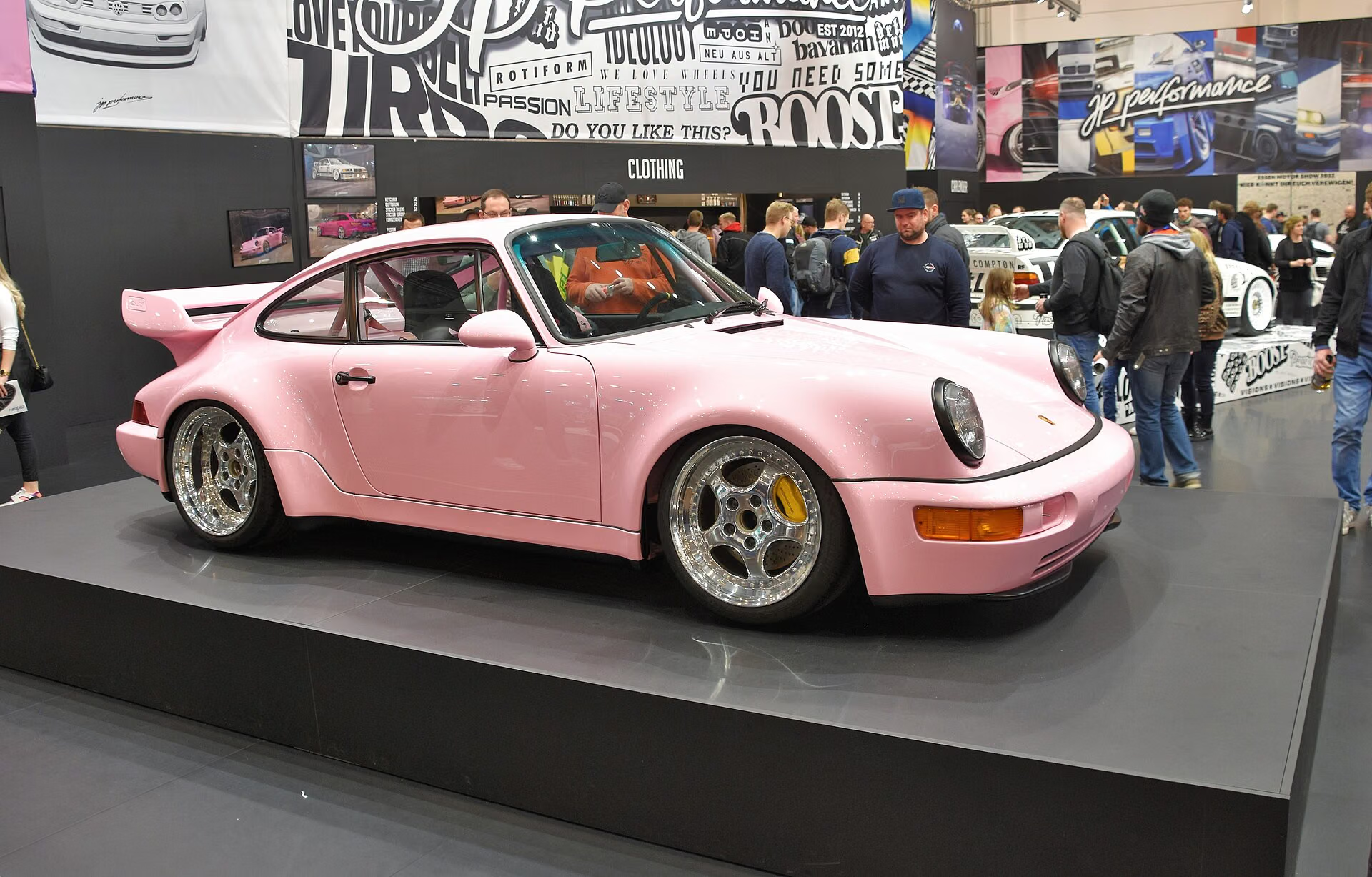 Limited911 Carrera RS 3.81993300 PS (221 kW; 296 bhp) @ 6,500 rpmRear-wheel drive; asymmetric limited-slip differential·Coupé
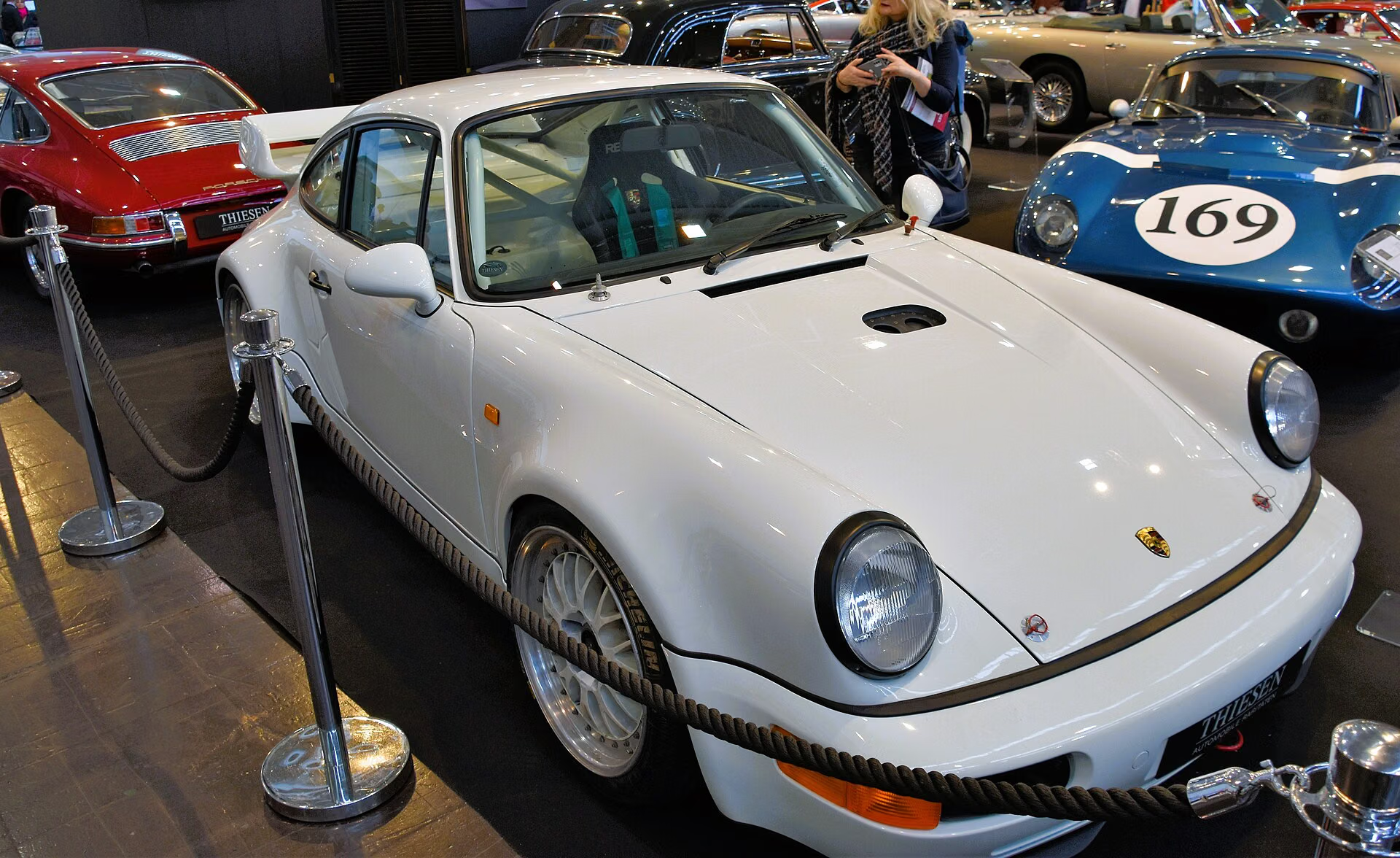 Limited911 Carrera RSR 3.81993–1994Porsche claimed 325 hp @ 6,900 rpm; 375 bhp unrestricted and 360 bhp with the 48 mm Le Mans restrictor (contemporaneous observers considered the official figure conservative)Rear-wheel drive·Coupé
 Limited911 Speedster1993–1994250 PS (184 kW; 247 hp) @ 6,100 rpmRear-wheel drive·Speedster · Roadster
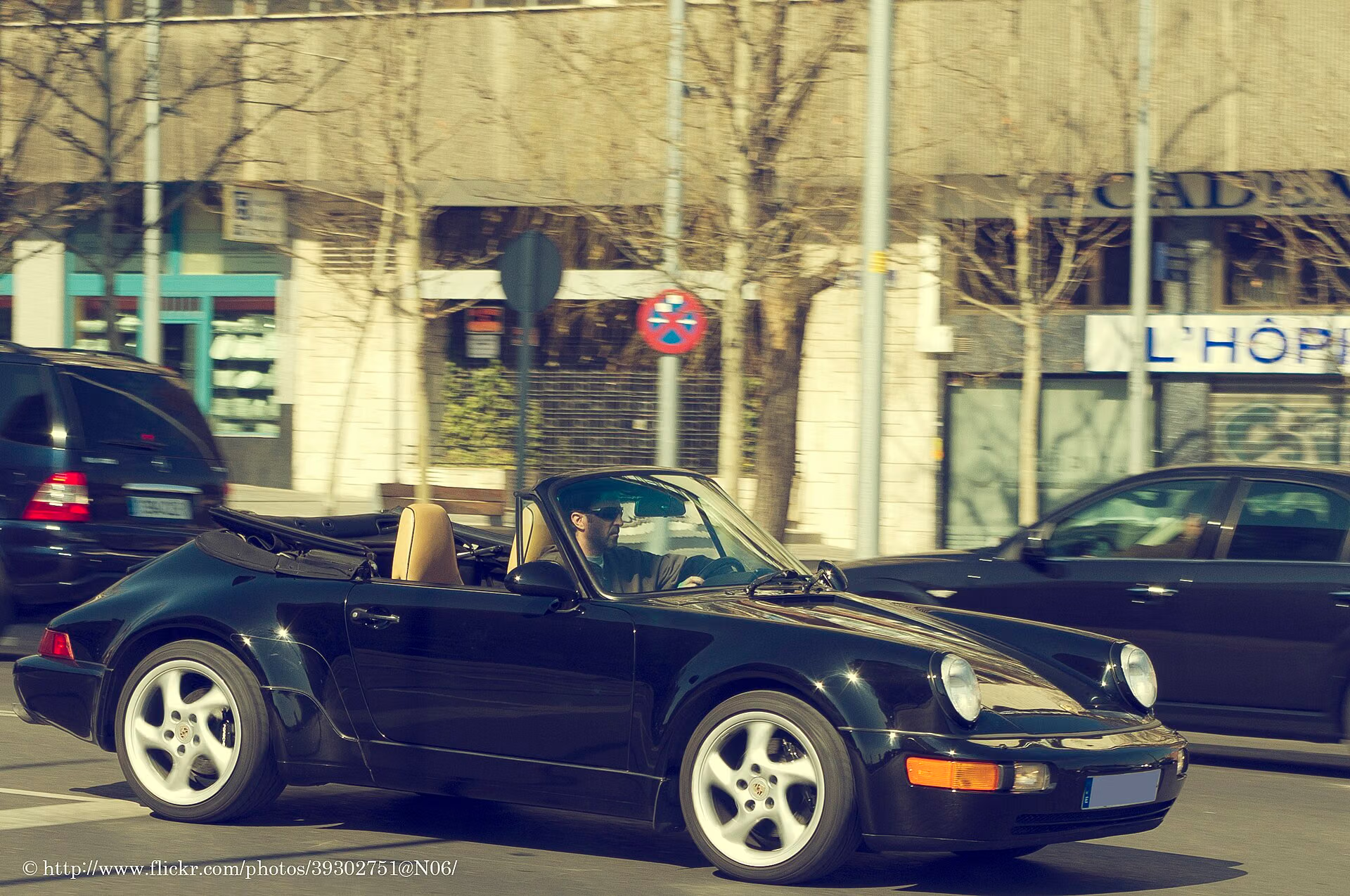 Limited911 America Roadster1992–1993250 PS (184 kW; 247 hp) @ 6,100 rpmRear-wheel drive·Roadster · Cabriolet
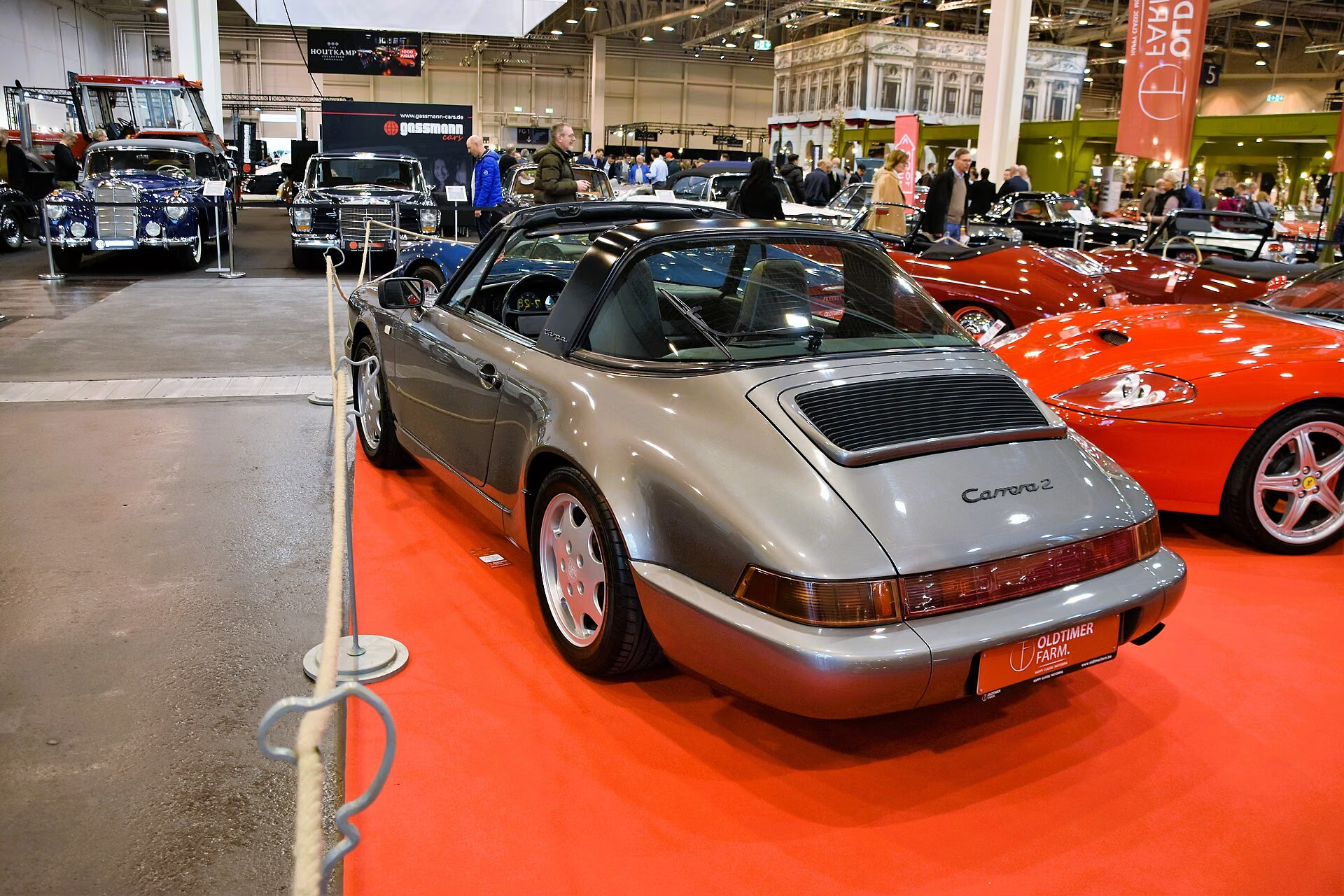 911 Targa1990–1994250 PS (184 kW; 247 hp) @ 6,100 rpmRear-wheel drive (Carrera 2) or all-wheel drive (Carrera 4), 31% front / 69% rear nominal·Targa
- Limited911 Carrera 4 30th Anniversary1993–1994250 PS (184 kW; 247 hp) @ 6,100 rpmAll-wheel drive — electronically controlled permanent AWD, 31% front / 69% rear nominal·Coupé
- Limited911 Carrera Cup1990–1993265 PS (195 kW; 261 hp) @ 6,100 rpm (1990–1991) → 275 PS (202 kW; 271 hp) @ 6,100 rpm (1992–1993)Rear-wheel drive·Coupé
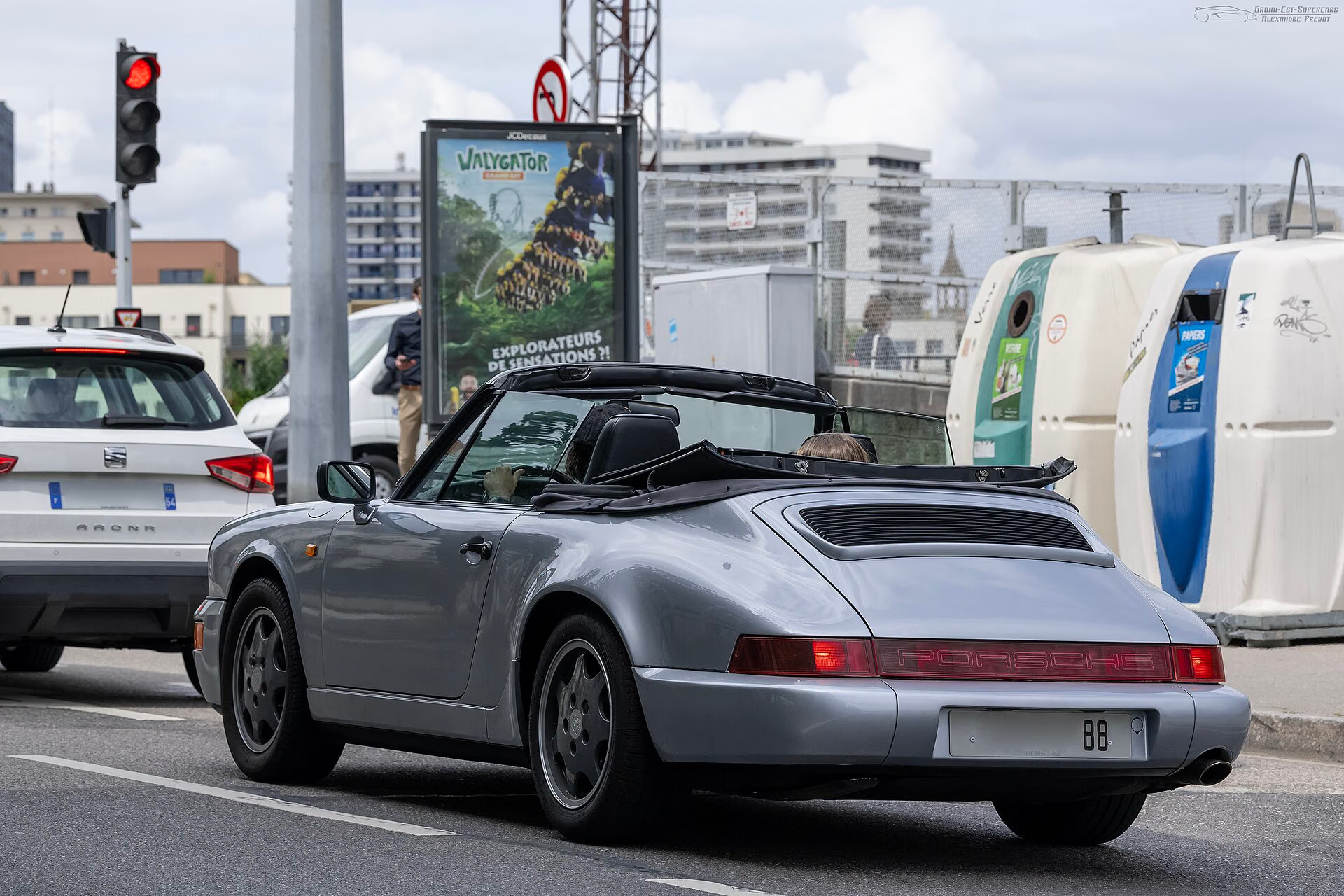 911 Carrera Cabriolet1990–1994250 PS (184 kW; 247 hp) @ 6,100 rpmRear-wheel drive (Carrera 2) or all-wheel drive (Carrera 4), 31% front / 69% rear nominal·Cabriolet
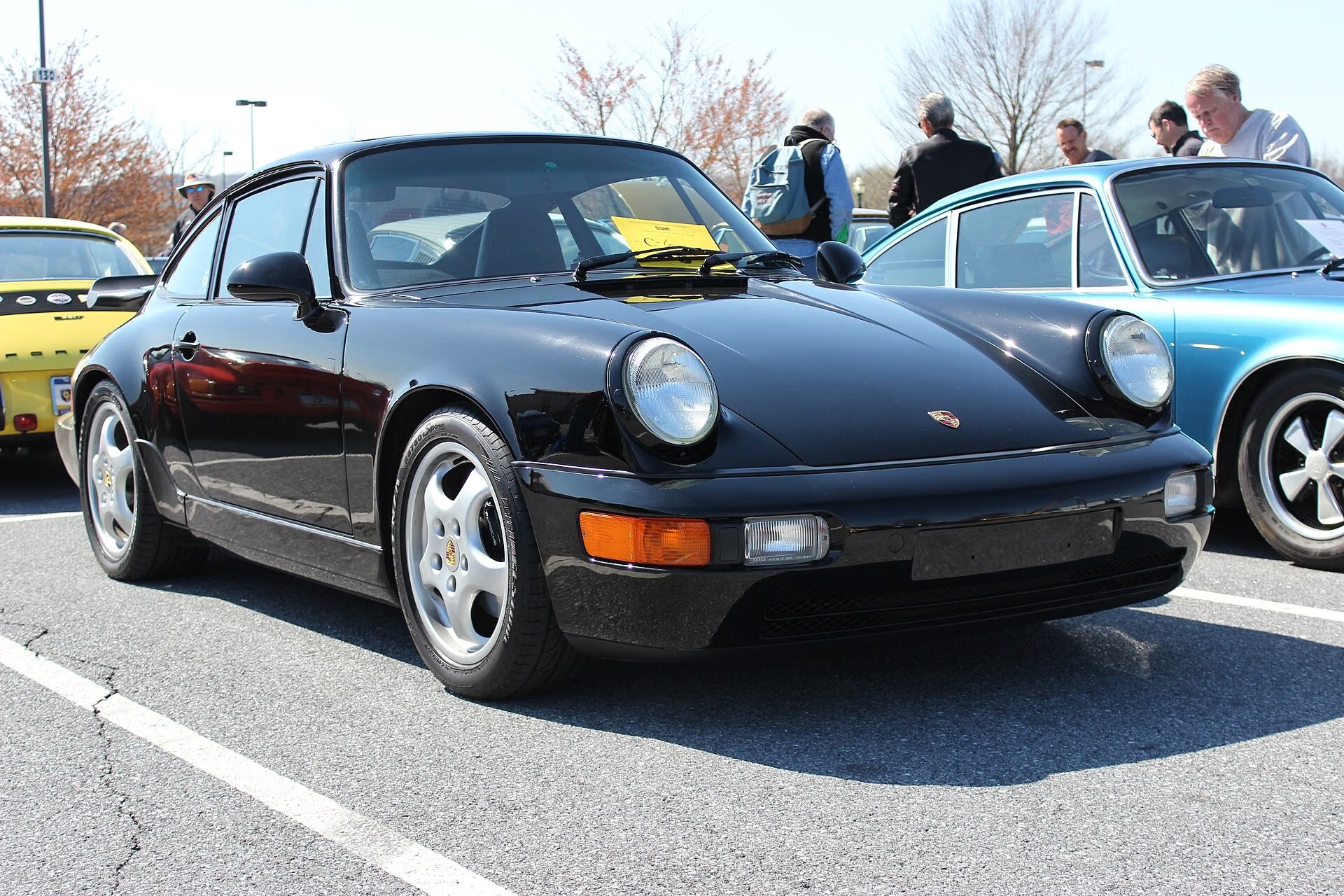 Limited911 RS America1993–1994250 PS (182 kW; 247 hp) @ 6,100 rpmRear-wheel drive·Coupé
- Limited911 Turbo S 3.3 Leichtbau1992–1993381 PS (280 kW; 376 hp) @ 5,750 rpmRear-wheel drive·Coupé
- Limited911 Turbo S 3.6 “Package”1994385 PS (283 kW; 380 hp) @ 5,750 rpmRear-wheel drive·Coupé
- Limited911 Carrera 4 Leichtbau1991Reported 300 hp (Stuttcars); not confirmed by Porsche, Wikipedia or any primary sourceAll-wheel drive — 959-derived system·Coupé
- Limited911 Turbo S LM-GT1993–1994475 hp (1993, per Wikipedia/Porsche Motorsport history)Rear-wheel drive·Coupé
- Limited911 Carrera RS N/GT1992–1993260 hp (191 kW; 257 bhp) minimum (the Carrera RS detune of the 3.6-litre Carrera 2 engine)Rear-wheel drive·Coupé
Watch
4 films on the 964
Curated from the 21 variants of the 964. Nothing is downloaded from YouTube — each player is an embed that only loads when you press play.
Generation · MotorWeek
1989 Porsche 911 Carrera 4 | Retro Review
Jay Leno-era retrospective drive of the first AWD 911
Generation · Number 27
From Most Hated to Most Loved, Is Porsche's 964 Now Overhyped?
balanced verdict on whether the 964 deserved its reputation
Generation · Petrolicious
1992 Porsche 964 Carrera RS: Rituals of Rennsport
92 RS 3.8 in period trim, and what 'Rennsport' meant
Generation · MotorWeek
1994 Porsche 911 Turbo 3.6 | Retro Review
the 3.6 turbo that made air-cooled Porsches mainstream
What the sources do not settle (12)
+
- 01Generation total conflicts across sources: 63,762 (Porsche Newsroom, Porsche Classic, Wikipedia, Stuttcars, 9werks), 62,172 (the Eberhard Kittler production table reproduced in Wikipedia, which is the sum of its own line items), 66,571 (supercars.net, by year and model) and 62,172 (Design911). The Porsche Classic figure of 63,762 is used for the headline stat; all alternatives are recorded here.
- 02Porsche Newsroom dates the Carrera 4 launch to August 1988 (DM 114,500) and the 964 span to 1988–1994, while Porsche Classic, Wikipedia and Stuttcars use model years 1989–1994. generation yearsStart uses 1988 per the task brief and the Newsroom press-kit title.
- 03Roster naming conflict (needs lead attention): data/roster.json and the task brief list “911 Carrera 4S” and “911 Carrera 2S” for this generation. Porsche never badged a 964 either name — the wide-body 964 Carreras were the Carrera 4 and Carrera 2 “Turbo-Look”, and the “4S”/“S” designations first appeared on the 993 in model years 1996 and 1997 (PCA). Roster ids are unchanged per contract; the display names in this file were corrected to “Turbo-Look” and the deviation is repeated in each affected variant's missing[].
- 04Roster gap: the 964 Cabriolet (15,815 cars) has no roster id. Appended as “cabriolet”.
- 05Roster gap: appended variants added beyond the 14 roster ids — cabriolet, rs-america, turbo-s-3.3, turbo-s-3.6-package, carrera-4-leichtbau, turbo-s-lm-gt. The 1989 Speedster (800 built, 641 Turbo-Look) is a 930-based car and deliberately excluded as it belongs to the G-series chapter.
- 06The 964 Carrera 4 Lightweight (1991, ~20–22 built) is listed in Elferspot as part of the 13,353 Carrera 4 coupés and is not separated in Wikipedia's table; its production count is therefore approximate.
- 07The 964 Carrera RS N/GT and the 45-car “Carrera Cup US Edition” US import are documented in the sources but not modelled as variants here, as no roster id exists and their inclusion is not requested. The 1992 Carrera RS breakdown (1,916 base + 73 Touring M002 + 290 Clubsport M003) is recorded in radicalmag but no separate variant entries were created.
- 08The 964 Turbo 3.6 S “Flachbau” total is variously given as 75, 76, 90 and 93 across sources; 76 is used because it itemises by market. See the turbo-s-3.6 entry.
- 09Porsche's consumer page “What is the Porsche 964?” states “a 30-strong run of 911 Jubilee models”, contradicting the 911 units quoted by Porsche Newsroom, Wikipedia, Stuttcars and jtcars. 911 is used; flagged for the lead.
- 10The brief's “glass Targa” description is incorrect for the 964: it retained the removable steel targa panel, the last 911 to do so until the 991. The fixed glass-roof Targa arrived with the 993. Verified against Wikipedia, Porsche Classic and Stuttcars.
- 11Media fields (heroImage, timelineImage, model3d, videos, credits) are intentionally empty — they are owned by the ASSET-IMAGES, ASSET-3D and ASSET-VIDEO agents and merged by the lead's scripts/merge-assets.ts.
- 12964 Carrera RS 'Lightweight' and 'Touring' (code M002) remain unmodelled: they are RS specification packages with no roster id, and no Porsche documentation for either was found (RS America is modelled separately as rs-america)