
1963–1973
901—1963–1973
Original 911 / F-Body
From 901 to Carrera RS: the legend begins
On 12 September 1963, at the Frankfurt IAA, a two-seat-plus-two coupé with a flat-six behind the rear axle was presented as the successor to the 356 — but under the name 901. At the Paris Salon that October, Peugeot objected: it held the French trademark on three-digit model numbers with a zero in the middle. Porsche renamed the car 911 for all markets rather than sell a different name in France alone, keeping the 901 prefix on engine and parts numbers for years. Series production began in September 1964. Porsche's own model history states that 82 units were built as 901 before the switch, though Porsche Museum collection manager Alexander Klein has argued that number is a long-repeated error inherited from a misread record.
The first-generation 911 arrived with something the 356 never had: two fold-down rear seats, a large luggage compartment and a 1,991 cc air-cooled SOHC flat-six making 130 PS and a stated 210 km/h. Porsche kept the rear-engined layout and the cooling-less boxer, and both became trademarks of the line. Over ten years the range grew from the plain 911 to the 911 S (160 PS, 1967), 911 T, 911 L and 911 E, the Targa safety cabriolet (1967), the semi-automatic Sportomatic four-speed (1967), the 57 mm longer wheelbase (from MY1969), Kugelfischer/Bosch mechanical fuel injection (1969), the 2.2-litre engines (1970), the 2.4-litre engines with the new Type 915 gearbox (1972) and the 2.7-litre Carrera RS that closed the era. With the T, E and S, Porsche became the first German manufacturer to meet US EPA emissions standards, and the Carrera RS 2.7 carried the first rear spoiler fitted as standard to a production car. Total first-generation production was 81,100 cars. The generation also proved itself in competition: a class-winning debut at the 1965 Monte Carlo Rally, three 911 S 2.2 (ST) cars finishing 1st, 2nd and 4th there in January 1970, and a production Carrera RS winning the 1972 Targa Florio against prototypes from Ferrari and Alfa Romeo.
Generation summary figures
Production
81,10081,1001963–1973)
Debut
12121963, IAA Frankfurt — presented as the 901
Engine family
2.0 / 2.2 / 2.4 / 2.7 L air-cooled flat-six, 110–210 PS
Power range
1101102.0 T) → 210 PS (154 kW; 207 hp) Carrera RS 2.7
Body styles
Coupé, Targa from 1967 — no factory Cabriolet until 1982
Homologation specials
91191120 · 911 T/R 35 · 911 S/T ≈33 · Carrera RS 2.7 1,580
The range
23 variants
901 · every entry linked
 911 2.01964–1967130 PS (96 kW; 128 hp)Rear-engine, rear-wheel drive·Coupé · Targa
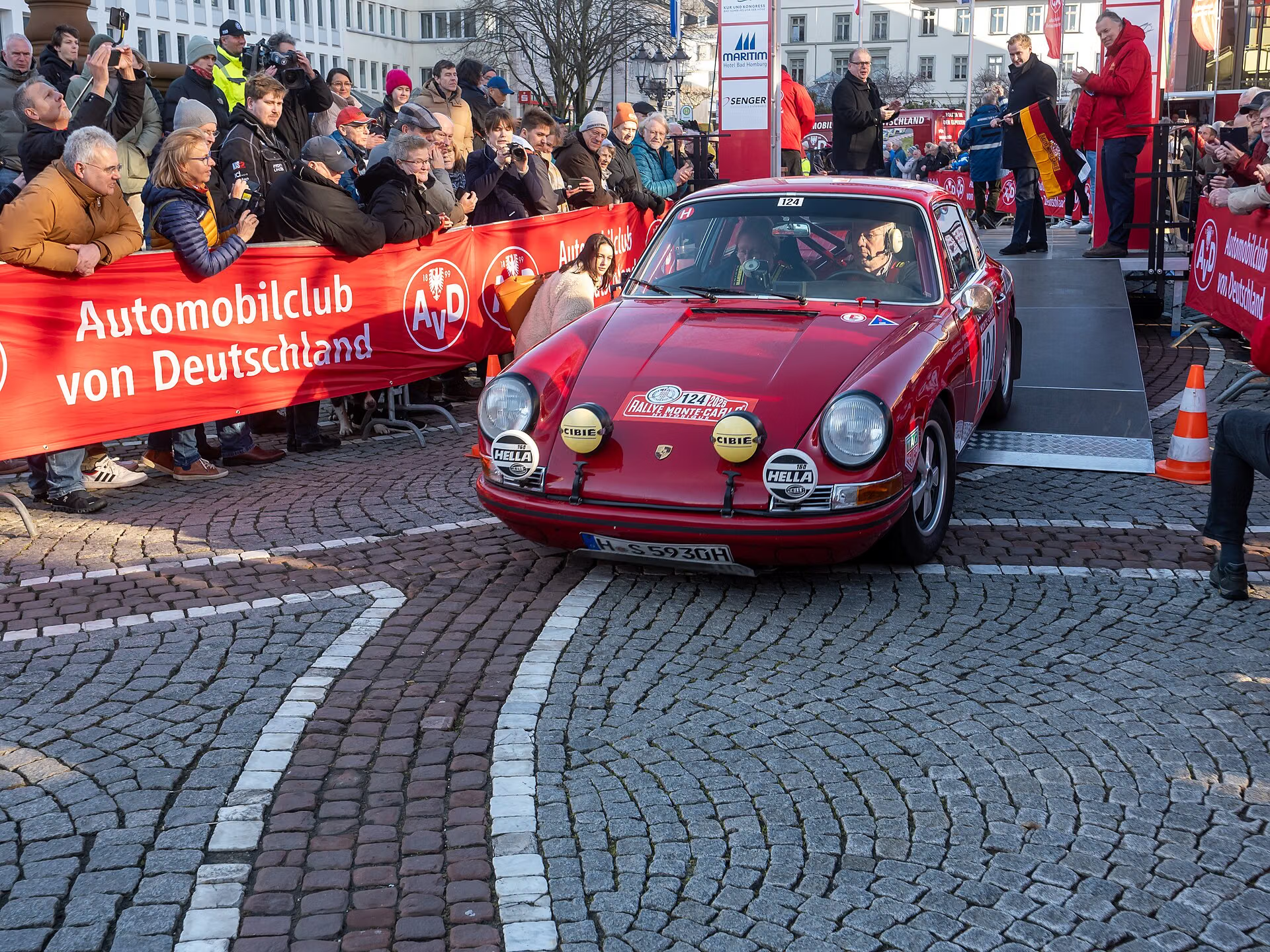 911 T 2.01967–1969110 PS (81 kW; 108 hp)Rear-engine, rear-wheel drive·Coupé · Targa
 911 L 2.01968130 PS (96 kW; 128 hp)Rear-engine, rear-wheel drive·Coupé · Targa
- 911 E 2.01969140 PS (103 kW; 138 hp)Rear-engine, rear-wheel drive·Coupé · Targa
 911 S 2.01967–1969160 PS (118 kW; 158 hp) at 6,600 rpm (1967–68); 170 PS (125 kW; 168 hp) with MFI (1969)Rear-engine, rear-wheel drive·Coupé · Targa
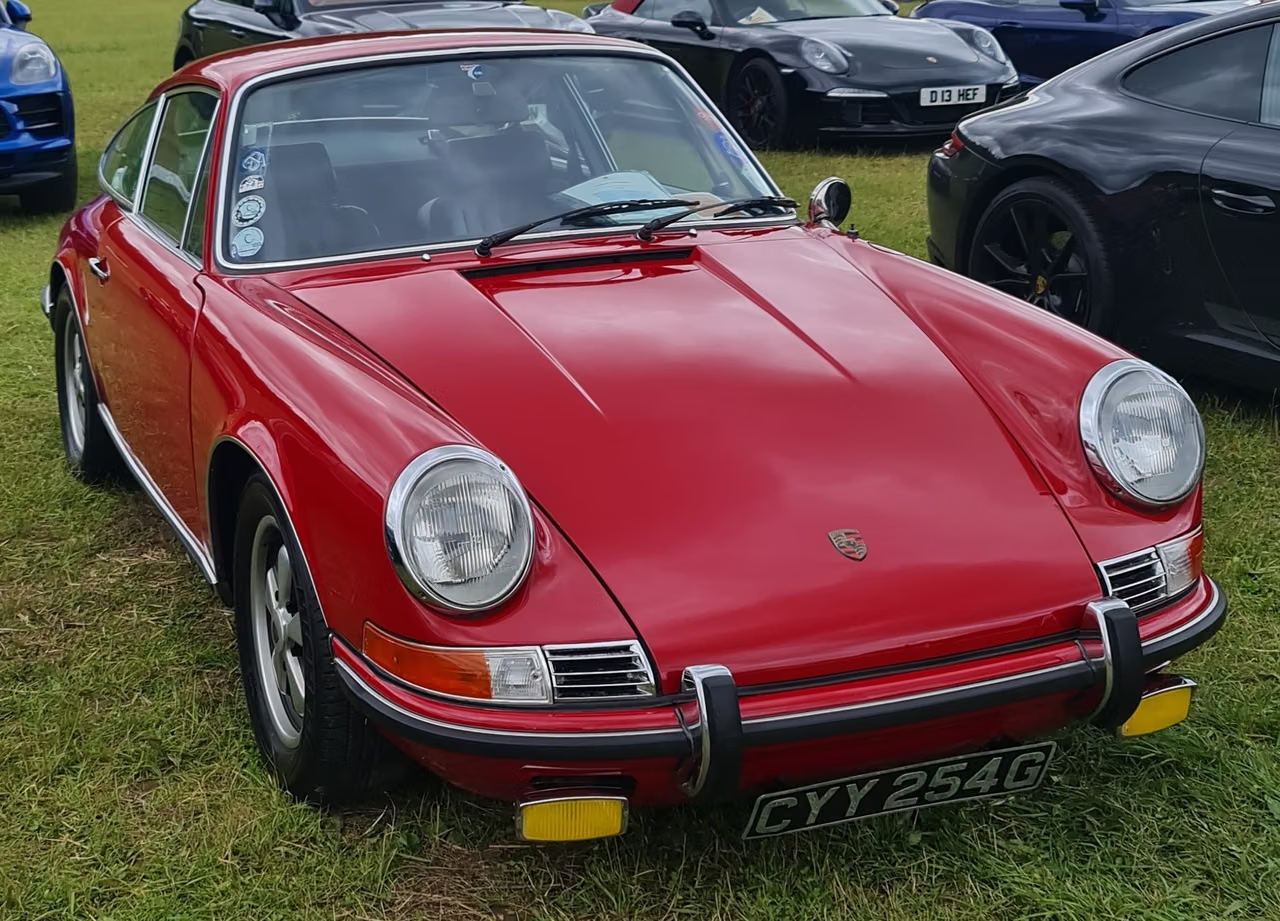 911 2.21970–1971125 PS (92 kW; 123 hp) to 180 PS (132 kW; 178 hp) across T, E and SRear-engine, rear-wheel drive·Coupé · Targa
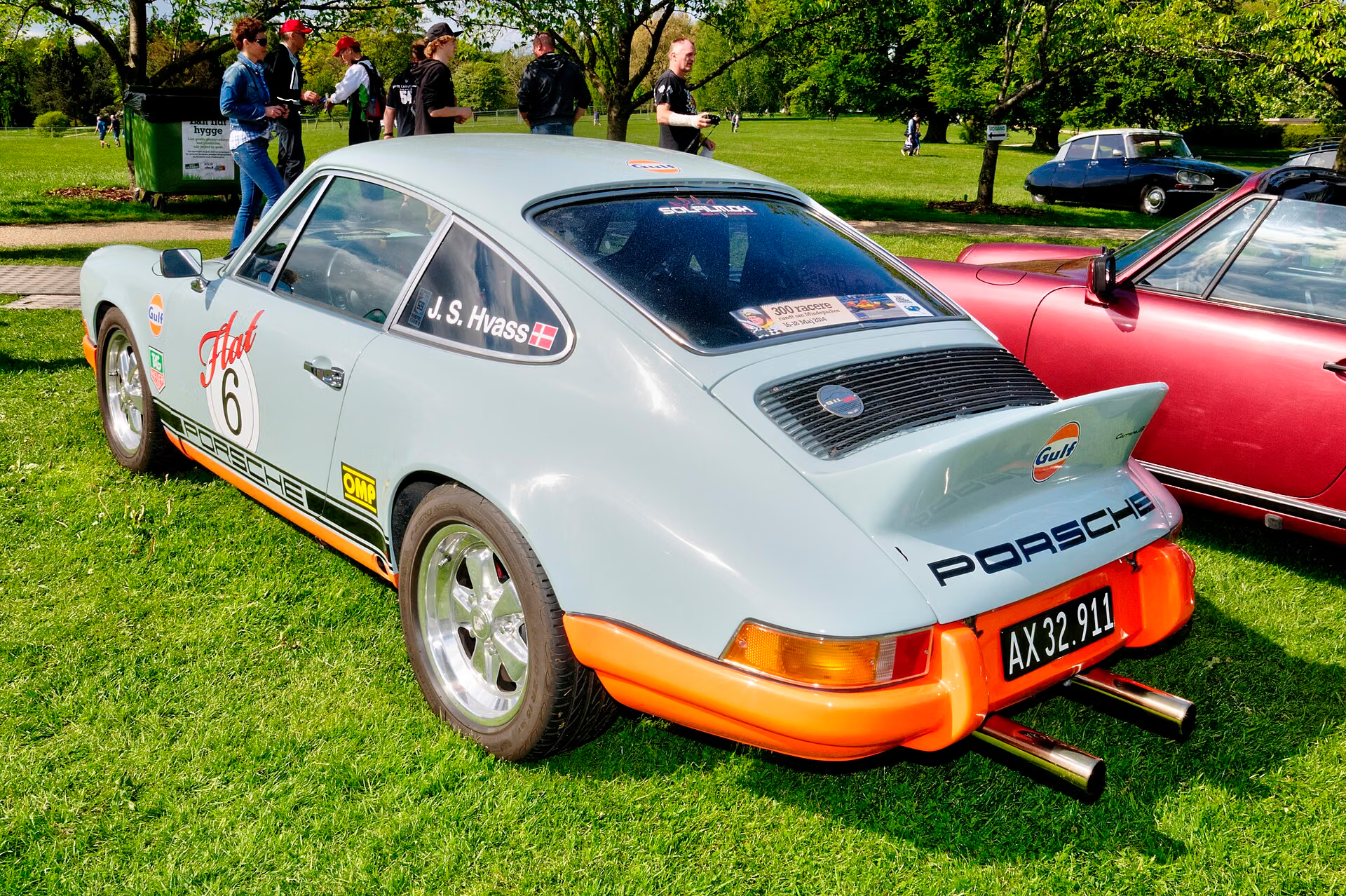 911 T 2.21970–1971125 PS (92 kW; 123 hp) at 5,800 rpmRear-engine, rear-wheel drive·Coupé · Targa
- 911 E 2.21970–1971155 PS (114 kW; 153 hp) at 6,200 rpmRear-engine, rear-wheel drive·Coupé · Targa
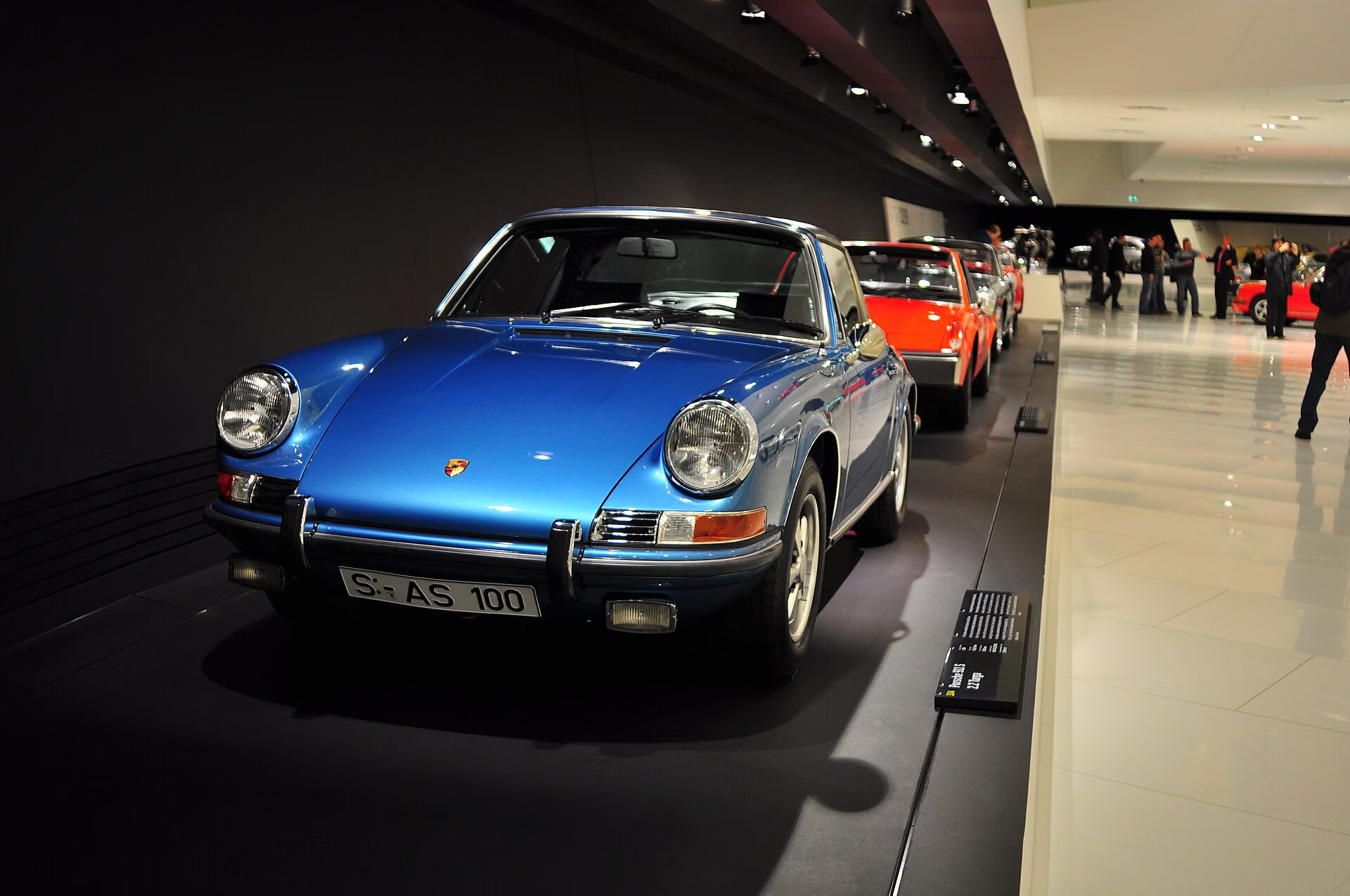 911 S 2.21970–1971180 PS (132 kW; 178 hp) at 6,500 rpmRear-engine, rear-wheel drive·Coupé · Targa
- 911 2.41972–1973130 PS (96 kW; 128 hp) to 190 PS (140 kW; 187 hp) across T, E and SRear-engine, rear-wheel drive·Coupé · Targa
 911 T 2.41972–1973130 PS (96 kW; 128 hp) carburetted; 140 PS (103 kW; 138 hp) with MFI in the US and JapanRear-engine, rear-wheel drive·Coupé · Targa
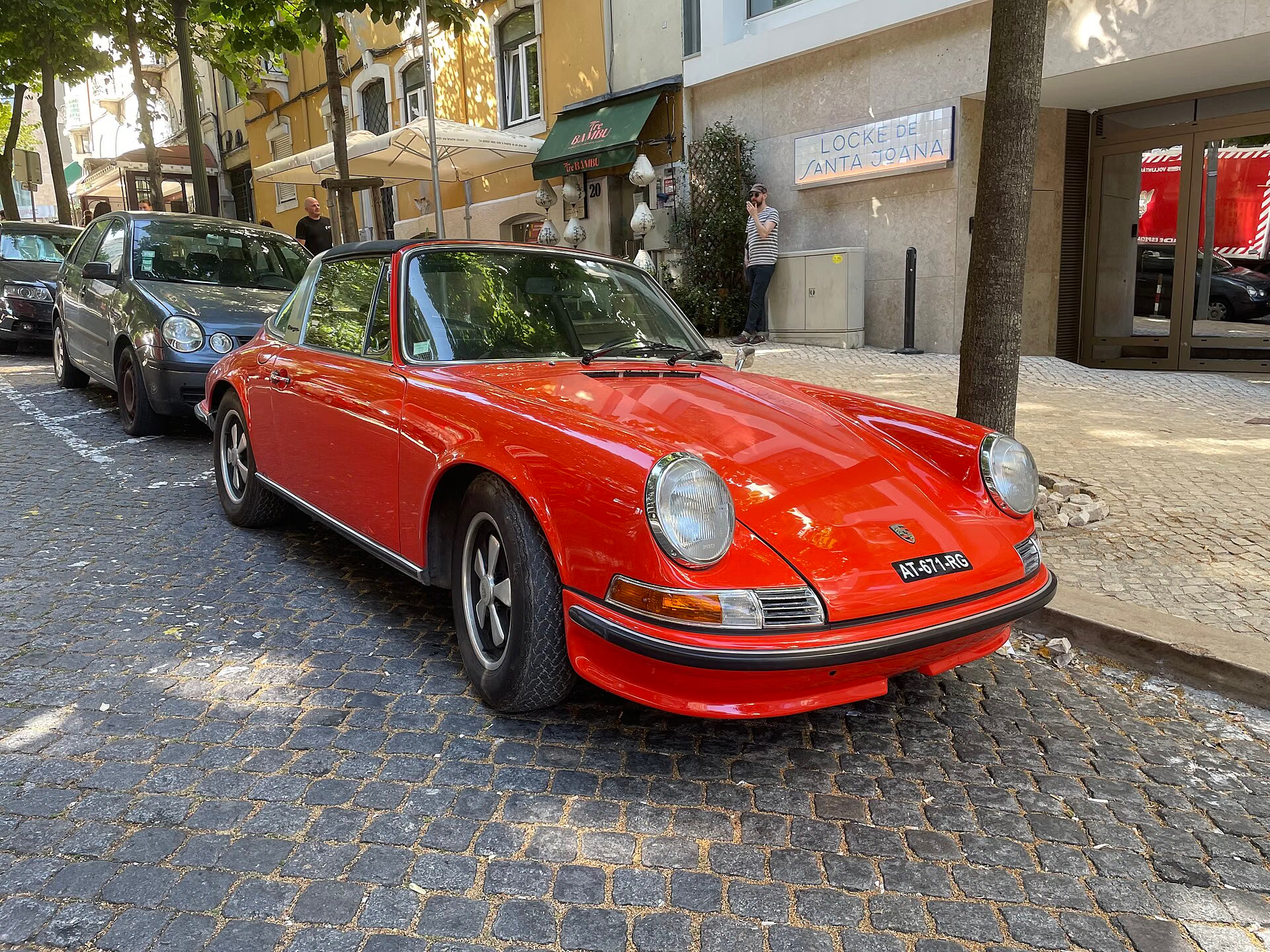 911 E 2.41972–1973165 PS (121 kW; 163 hp) at 6,200 rpmRear-engine, rear-wheel drive·Coupé · Targa
 911 S 2.41972–1973190 PS (140 kW; 187 hp) at 6,500 rpmRear-engine, rear-wheel drive·Coupé · Targa
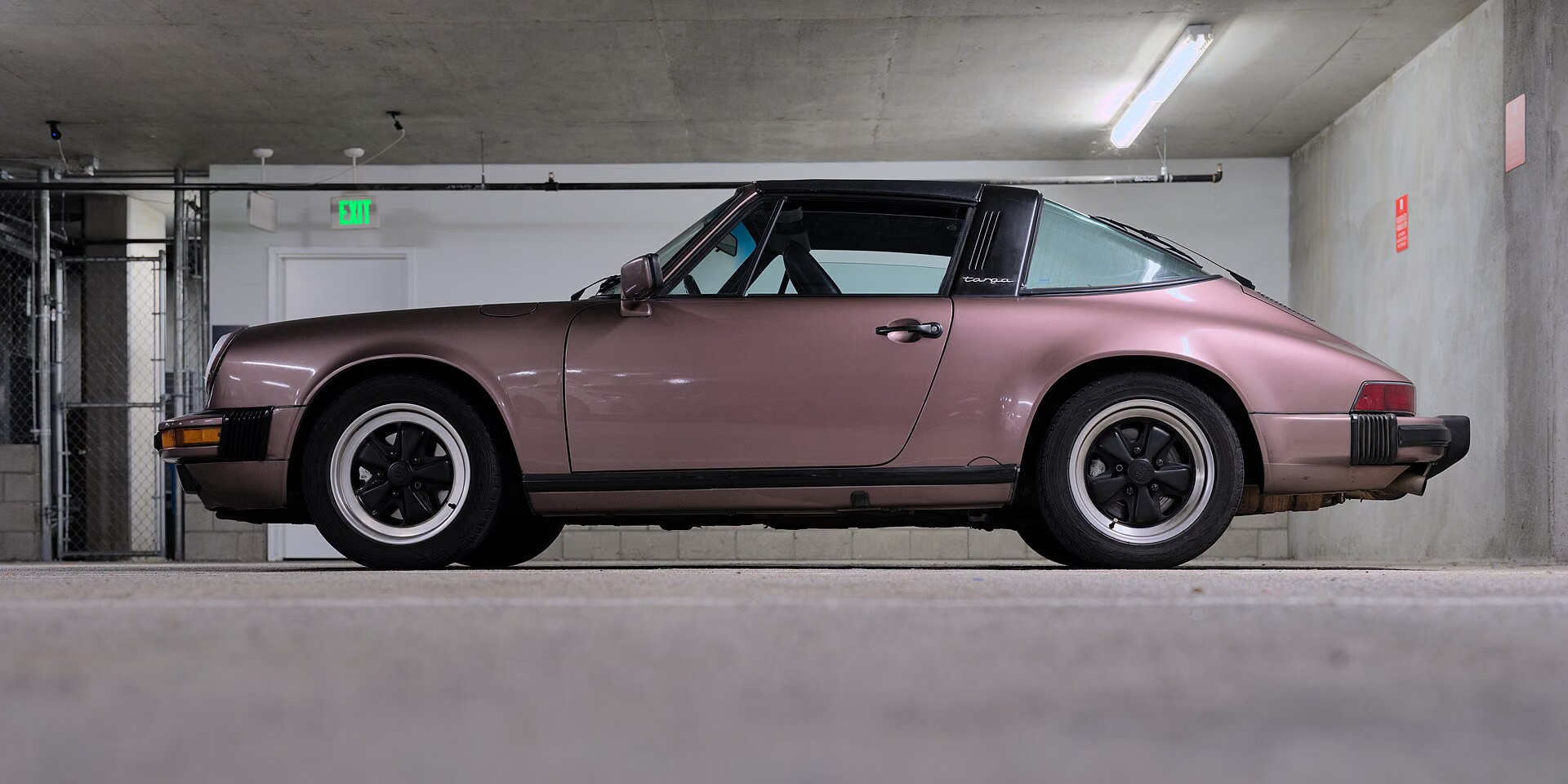 911 Targa1966–1973130 PS (2.0) to 190 PS (140 kW; 187 hp) (2.4 S)Rear-engine, rear-wheel drive·Targa
- Limited911 Cabriolet (Hebmüller)1965130 PS (96 kW; 128 hp) — standard 2.0 output for 1965Rear-engine, rear-wheel drive·Cabriolet
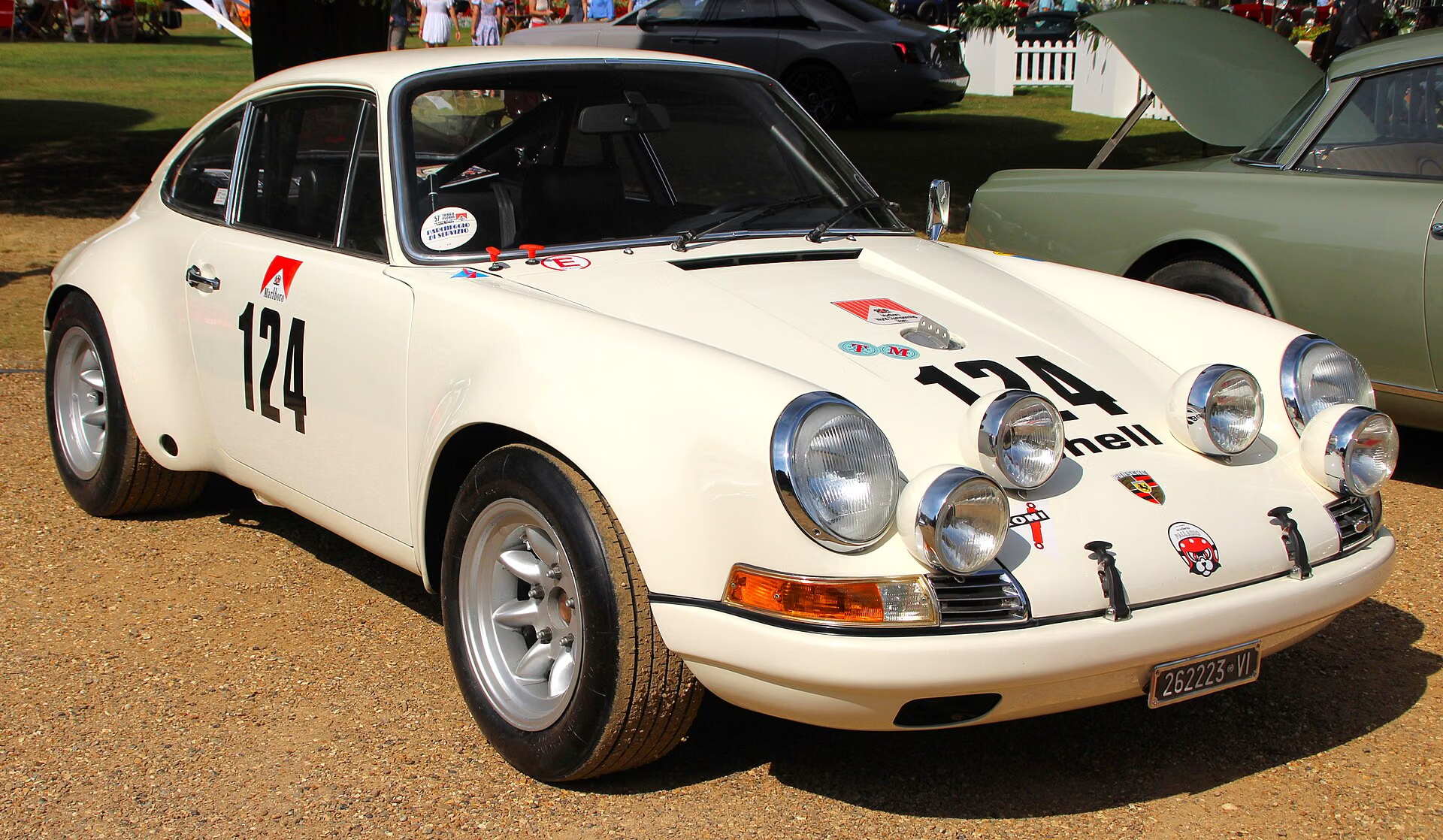 Limited911 ST1969–1972up to 270 PS (199 kW; 265 hp) at 8,000 rpmRear-engine, rear-wheel drive·Coupé
 Limited911 Carrera RS 2.71972–1973210 PS (154 kW; 207 hp) at 6,300 rpmRear-engine, rear-wheel drive·Coupé
- Limited911 S/T1969–1972up to 270 PS (199 kW; 265 hp) at 8,000 rpmRear-engine, rear-wheel drive·Coupé
- LimitedPorsche 9011963–1964130 PS (96 kW; 128 hp)Rear-engine, rear-wheel drive·Coupé
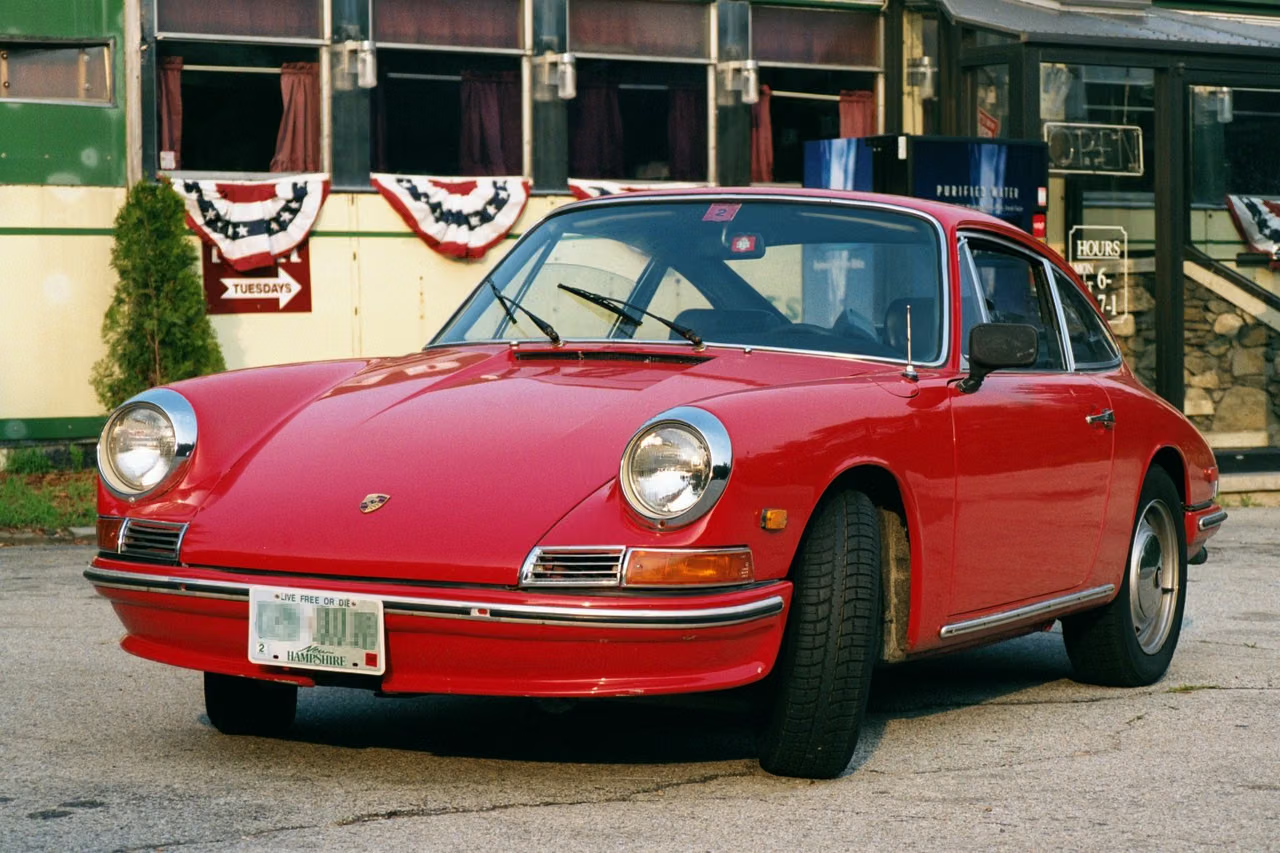 Porsche 9121965–196990 PS (66 kW; 89 hp)Rear-engine, rear-wheel drive·Coupé · Targa
- Limited911 R1967210 PS (154 kW; 208 hp)Rear-engine, rear-wheel drive·Coupé
- Limited911 T/R1968210 bhp (154 kW)Rear-engine, rear-wheel drive·Coupé
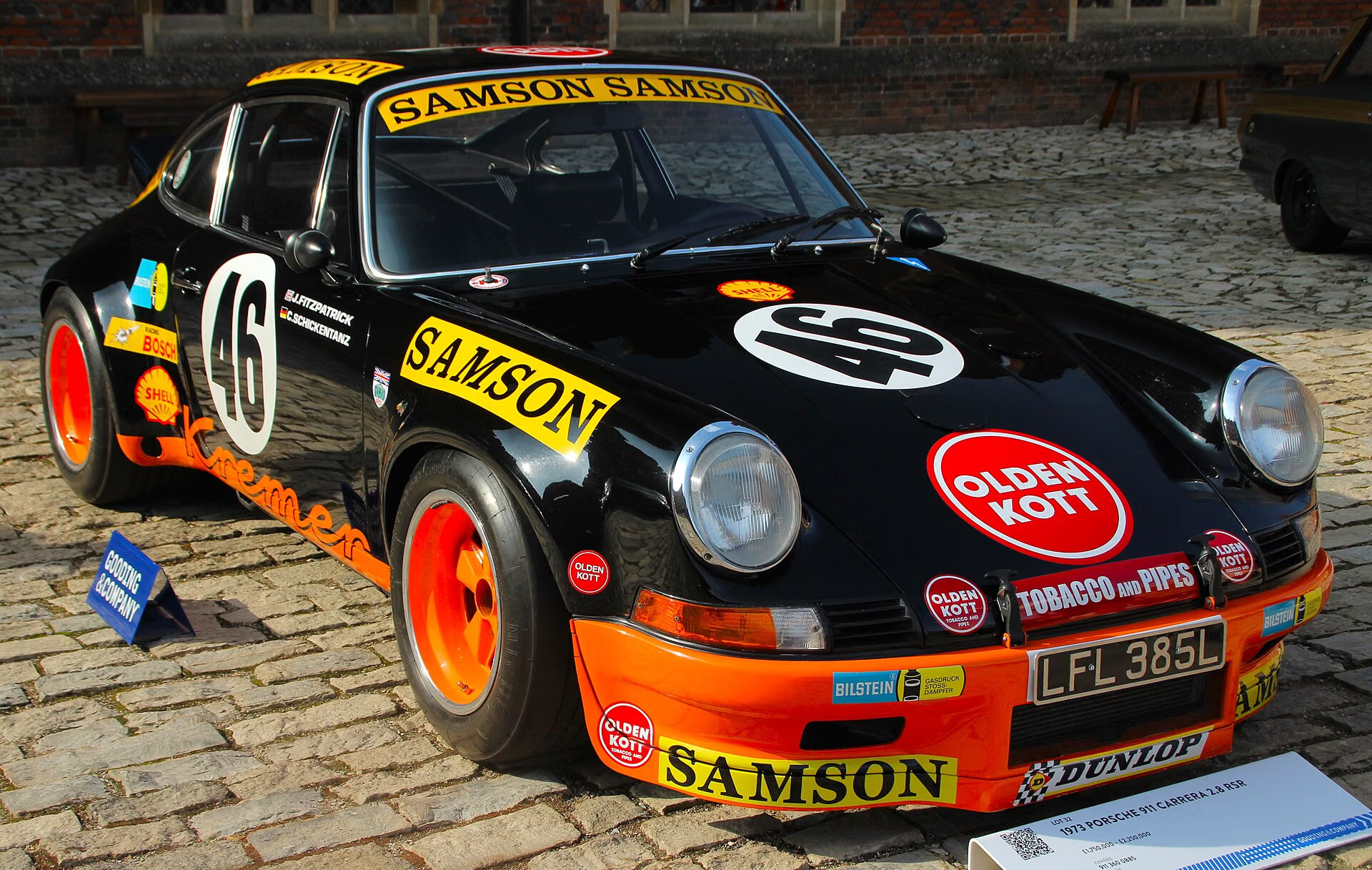 Limited911 Carrera RSR 2.8 (M491)1973312 PS (229 kW; 308 hp)Rear-engine, rear-wheel drive·Coupé
Watch
3 films on the 901
Curated from the 23 variants of the 901. Nothing is downloaded from YouTube — each player is an embed that only loads when you press play.
Generation · The Wheel Network
Porsche Historic Footage – Porsche 911 Prototype and Premiere at the 1963 Frankfurt Motor Show
archival footage of the 901 Frankfurt debut that created the 911
Generation · 9WERKS TV
Porsche 901 prototype: the second-oldest surviving 911 of all time!
factory-original 901 prototype, the car Peugeot nearly stopped
Generation · Petrolicious
This 1968 Porsche 911L Was Just A Dream
series-two longhood 911L, the best of the very early 911s
What the sources do not settle (9)
+
- 01Official 0–100 km/h acceleration and Porsche-published kerb weights for most 2.0 / 2.2 / 2.4 variants — Porsche never published them; only magazine and test figures (mostly 0–60 mph) exist, so acceleration is null or 0–97 km/h where no 0–100 figure could be found
- 02911 Cabriolet (Hebmüller), 1965: production count and all specifications unverified — no Porsche, auction or registry source found; the widely quoted "130" figure must not be published
- 03911 ST and 911 S/T production totals conflict across sources (≈33 per stuttcars vs ≈50 per an alternative year-by-year tally; Wikipedia flags the uncertainty). Porsche Newsroom only says production ran "after about three years"
- 04Carrera RS 2.7 total: Porsche Newsroom and Wikipedia state 1,580 (1,308 Touring / 200 Sport lightweight / 55 RSR / 17 base); two secondary compilations state 1,590; the 1,592 figure mentioned in the brief could not be sourced
- 05Targa debut year is reported inconsistently: MY1967 on Porsche's model pages, 1965 in the Newsroom IAA milestone list (patent August 1965), late 1966 for first deliveries
- 06Number of cars actually badged "901": Porsche states 82, Porsche Museum's Alexander Klein says that figure is a long-repeated error
- 07Per-variant production counts for the 911 T 2.0 and 911 E 2.0 could not be verified; stuttcars' own 2.2 E and 2.4 E figures conflict internally
- 08Media fields intentionally left empty: heroImage / timelineImage / model3d / videos / gallery / credits are owned by ASSET-IMAGES, ASSET-3D and ASSET-VIDEO
- 09Decision needed from the lead: appended variants outside the canonical roster — porsche-901, 912, 911-r, 911-t-r, carrera-rsr-2.8. The 912 in particular is a four-cylinder 911-bodied car, not a 911 six-cylinder model